
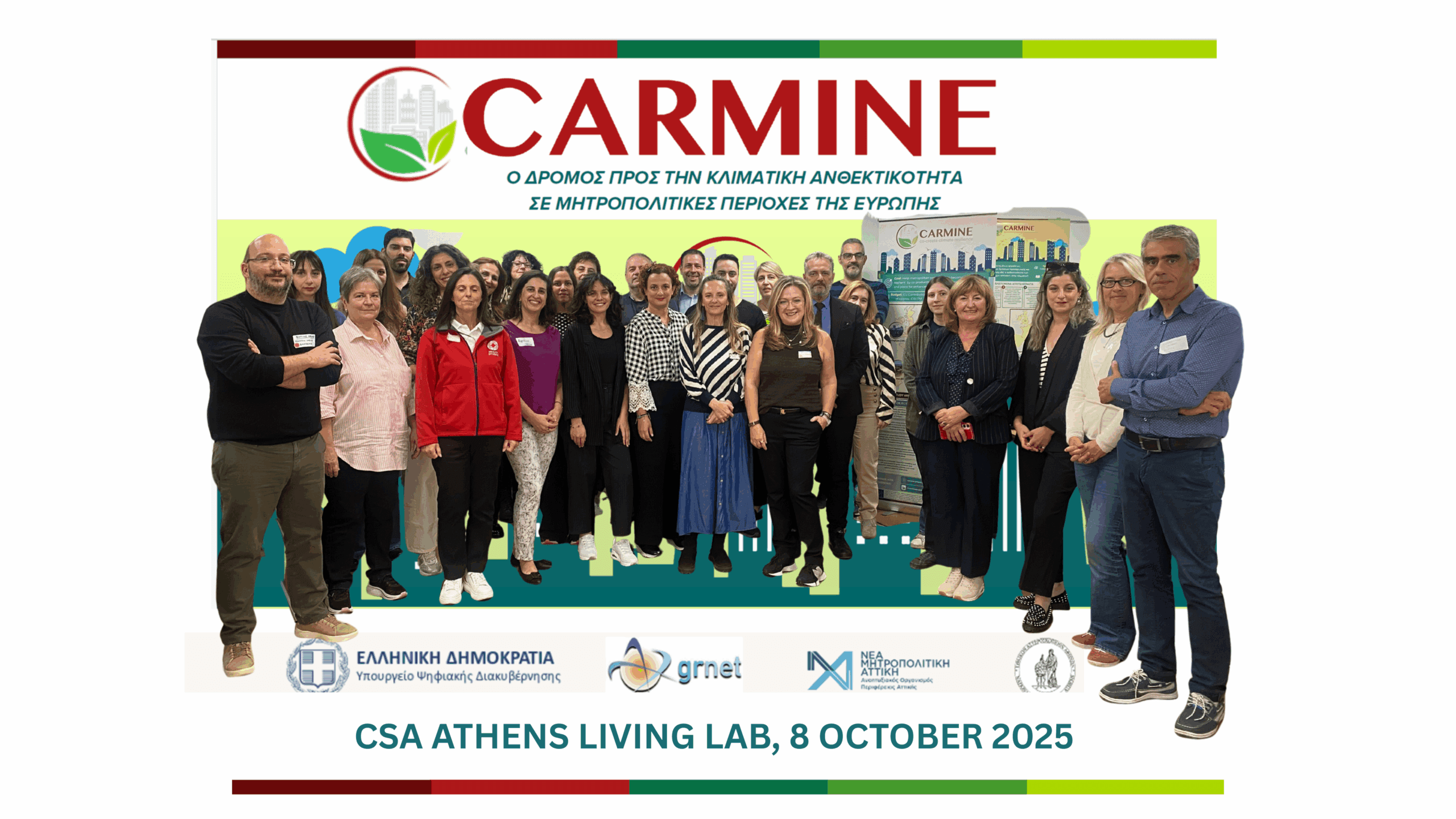
The European project CARMINE aims to enhance the resilience of metropolitan areas against the impacts of climate change through the development of scientifically substantiated tools, policies, and adaptation strategies.
In this context, the 2nd Workshop of the Living Lab on urban heat resilience and health in Metropolitan Athens was held on October 8, 2025, at the offices of the National Research and Technology Infrastructure (GRNET), organized by the Ministry of Digital Governance, the National Observatory of Athens, and New Metropolitan Attica S.A.
The workshop was attended by representatives of public administration, local government, research organizations, civil protection agencies, social services, and civil society organizations. The goal was to formulate common approaches and solutions to address the increasing risks from urban heat and its impacts on public health through the collaboration of different sectors such as health, urban planning, housing, and civil protection.
Among the key outcomes of the workshop was the formulation of a common vision for 2050, which includes the development of zero-emission buildings, tackling energy poverty, creating more green spaces and urban forests, and using advanced technological tools for predicting and managing natural hazards.
Additionally, the first research results in municipalities of Attica were presented, highlighting that although extreme heat is a significant priority for the majority of municipalities, many still lack comprehensive action plans, underscoring the need to strengthen institutional and operational readiness.
The results of the workshop significantly contribute to improving the quality of life for citizens, protecting vulnerable social groups, and enhancing sustainable urban development.